
How to Use Urgency in E-Commerce Without Losing Customer Trust
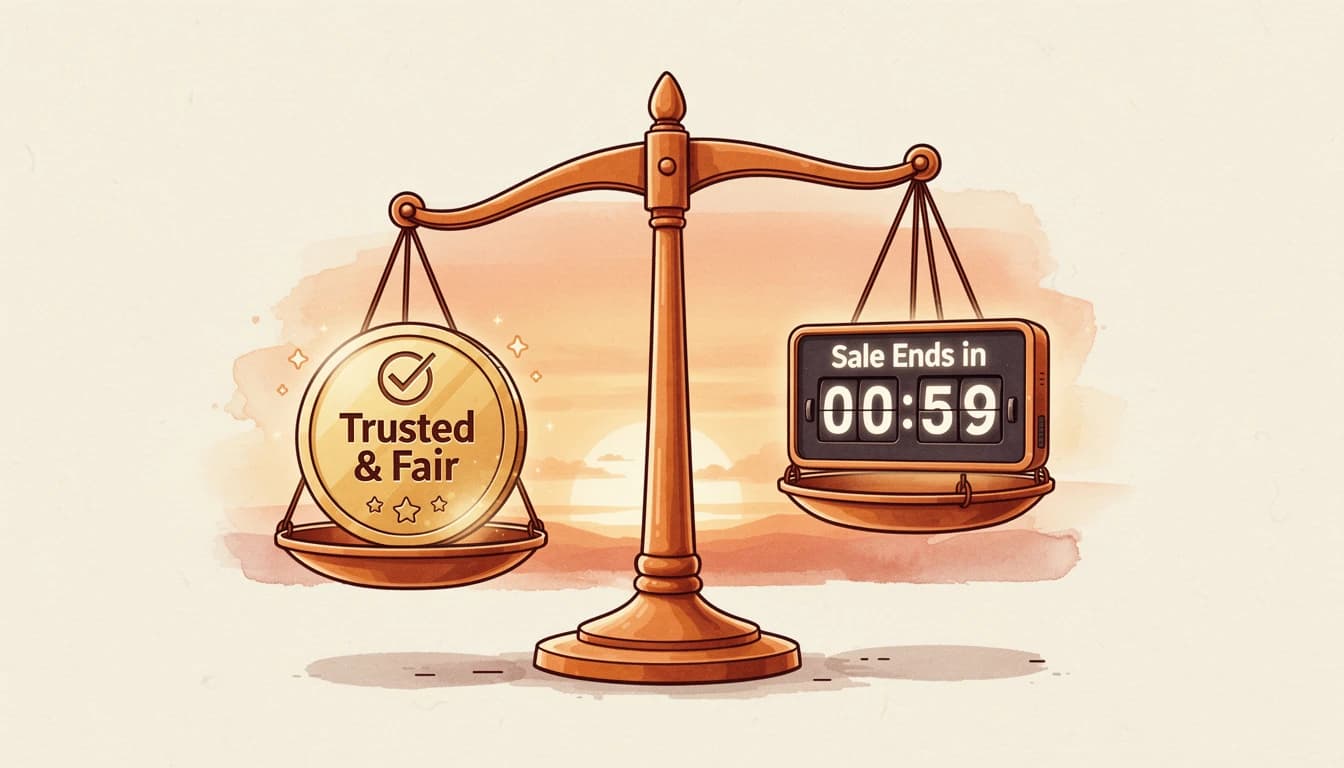
Urgency works. A customer who believes a product might sell out is more likely to buy it now. That's basic psychology, and e-commerce stores have used it for decades. But there's a growing gap between stores that use urgency honestly and stores that manufacture it - and customers are getting better at telling the difference.
Research on dark patterns in e-commerce paints a clear picture: 56% of consumers report losing trust in websites after encountering manipulative design practices. Worse, 43% stop purchasing from those retailers entirely. Short-term conversion gains from fake urgency come at the cost of long-term customer relationships.
The good news is that authentic urgency - backed by real data - can be just as effective without the trust penalty.
The Problem with Manufactured Urgency
Manufactured urgency relies on fabricated or misleading signals to pressure customers into quick purchases. These tactics are widespread enough that most online shoppers have encountered them:
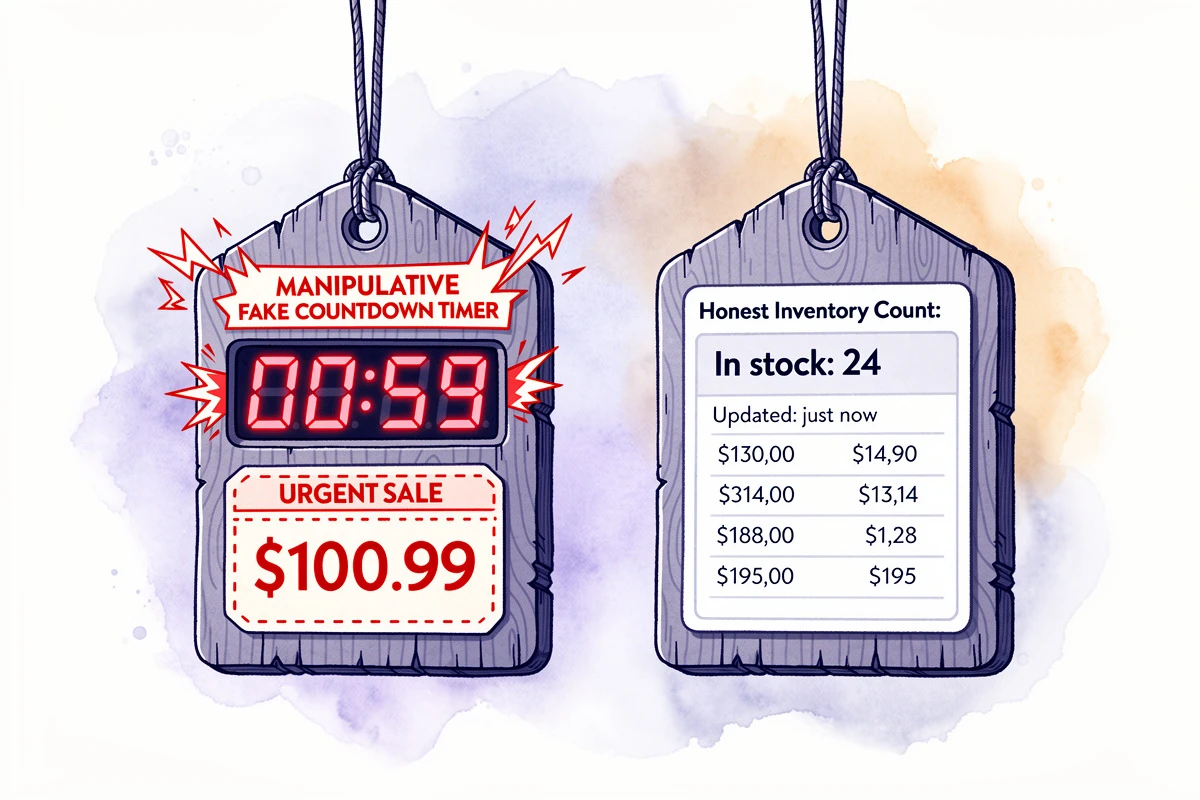
Countdown timers that reset
A timer counting down to the "end of this offer" sounds urgent. But when the customer returns the next day and sees the same timer running again, the urgency evaporates - along with their trust. The timer wasn't tracking a real deadline. It was a psychological prop.
Fake visitor counts
"47 people are viewing this right now" creates a sense of competition for the product. But when the number changes randomly with each page refresh, or stays suspiciously high for a niche product, customers recognize it as theater rather than data.
Permanent "limited time" offers
A banner declaring "Sale ends today!" loses meaning when it appears every day for months. Customers who notice the pattern learn to ignore all urgency signals from that store - including legitimate ones.
Always-low stock displays
Some stores show "Only 2 left!" on every product regardless of actual inventory. When a customer orders the product and sees it still showing "Only 2 left" a week later, the store's credibility is damaged. The signal becomes noise.
Why Authentic Urgency Works Better Long-Term
The difference between real and fake urgency isn't subtle - it's the difference between information and manipulation. Real urgency tells customers something true about the world. Fake urgency tells them something designed to exploit their psychology.
When a customer sees "Only 3 left" on a product that actually has 3 units in your warehouse, several things happen:
- The urgency is real - the product could genuinely sell out
- The data is verifiable - if they wait and the product sells out, the notice was accurate
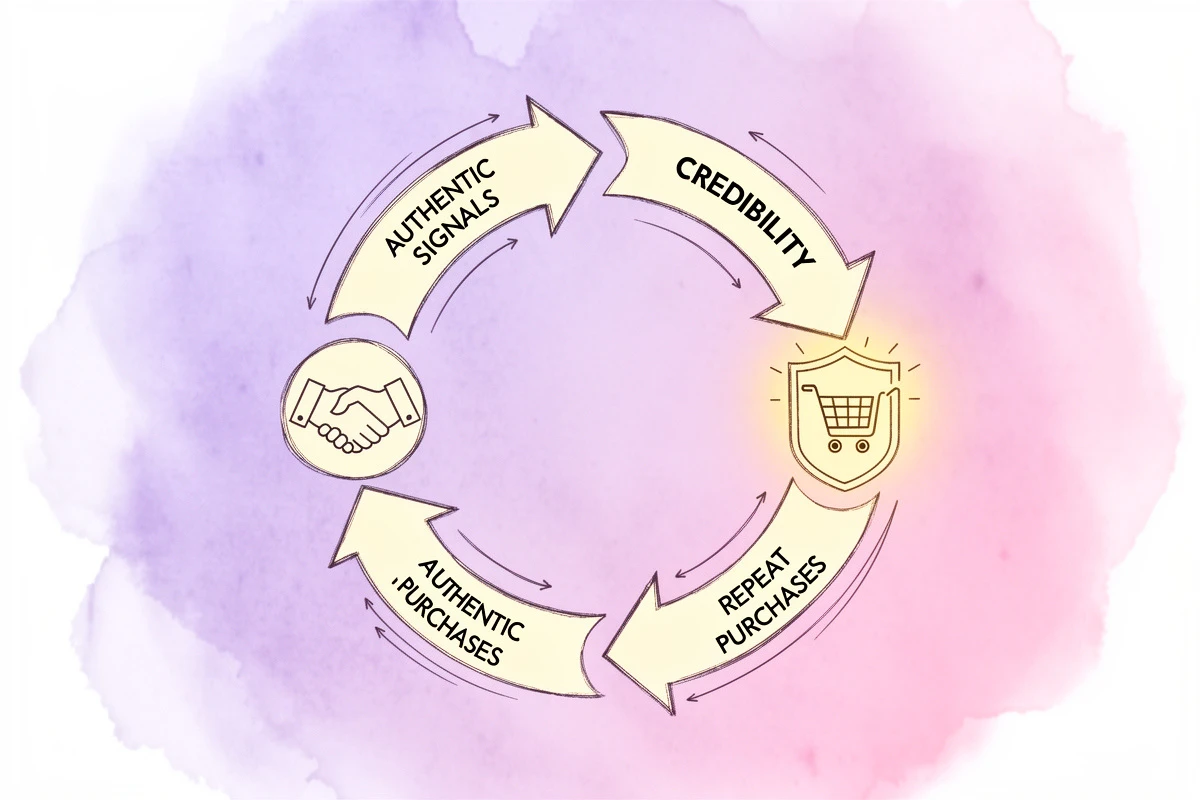
- Trust compounds - the next time they see a low-stock notice, they take it seriously
- No guilt or resentment - the customer doesn't feel tricked after purchasing
Contrast this with a customer who buys under pressure from a fake countdown timer. Even if they're happy with the product, discovering that the "urgency" was fabricated creates resentment. They question every future interaction with the store.
Principles for Trustworthy Urgency
Building urgency that helps rather than harms requires following a few straightforward principles.
Use real data, not scripts
Inventory-based notices that pull live stock counts from your actual warehouse are inherently honest. The number changes because products are being purchased, not because a script is generating random values. When a customer sees "Only 4 left" and returns later to see "Only 2 left," they know the data is live - and that builds more urgency than any fake signal could.
Show urgency only when it's genuine
If a product has 500 units in stock, there's no urgency to communicate. Setting appropriate inventory thresholds - typically between 3 and 10 depending on your product velocity - means notices only appear when stock is genuinely running low.
A low threshold like 5 means the notice appears roughly when the product might sell out within days. That's useful information for the customer, not a pressure tactic.
Let customers verify the signal
The strongest urgency signals are ones customers can confirm are real. An inventory count that changes between visits proves it's tracking actual stock. A sale that actually ends on the stated date proves the deadline was real. A product that sells out after showing low stock proves the notice was accurate.
Each confirmed signal makes the next one more powerful. Each fake signal makes the next one weaker.
Use factual language
"Only 3 left" is a statement of fact. "HURRY! Almost gone forever!!!" is emotional manipulation. The data itself creates urgency - the language doesn't need to amplify it with exclamation points, capitalization, or dramatic phrasing.
Factual language respects the customer's ability to make their own decisions. They can see 3 units remain and decide for themselves whether that warrants immediate action. That respect builds trust.
Where Real Urgency Has the Most Impact
Not all cart placements benefit equally from urgency signals.
Upsell recommendations
This is the highest-value placement for inventory notices. A recommended product that's running low gives the customer a reason to add it now rather than bookmarking it for later. Combined with star ratings that validate the product's quality, the urgency becomes a nudge toward a well-informed decision rather than a pressure tactic.
Line items approaching checkout
A customer who has added a product but hasn't checked out benefits from seeing that stock is depleting. It reframes the delay - the risk isn't just that they'll forget, it's that the product might not be available when they return. This is particularly effective for reducing cart abandonment.
Seasonal and limited-edition products
Products that genuinely won't be restocked are the strongest case for urgency messaging. Customers understand that seasonal items and limited runs have real supply constraints, so urgency signals on these products feel natural rather than forced.
Combining Urgency with Trust Signals
Urgency is most effective when the customer trusts the store. Without trust, urgency can actually increase abandonment - the customer feels pressured and leaves. Pairing urgency with signals that build confidence makes the combination work:
- Trust badges: Security and guarantee badges reassure customers that purchasing quickly is safe
- Star ratings: Social proof validates the product, so urgency applies to something the customer can feel confident about
- Savings display: Showing the discount alongside low stock means the customer is acting on value, not just fear of missing out
The result is a cart that says: "This is a good product (reviews), at a good price (savings), and there aren't many left (inventory)." That's information, not manipulation.
The Regulatory Direction
Beyond ethics and customer relationships, there's a practical reason to avoid fake urgency: regulations are catching up. The EU's Digital Services Act and the FTC's enforcement actions have increasingly targeted deceptive design patterns, including fake scarcity and manufactured urgency. Stores using fabricated urgency face potential legal consequences on top of the trust damage.
Building urgency on real data isn't just the ethical choice - it's the sustainable one. Real inventory counts don't need legal disclaimers. Genuine sale deadlines don't need to be defended. Data-driven urgency is inherently compliant because it's inherently true.
Getting Started with Honest Urgency
The transition from manufactured to authentic urgency is straightforward:
- Replace fake signals with real data - swap countdown timers and random viewer counts for actual inventory levels
- Set honest thresholds - choose an inventory threshold that reflects genuine scarcity for your product velocity
- Use factual language - let the number speak for itself without dramatic framing
- Pair with trust signals - combine urgency with reviews and guarantees so customers feel informed, not pressured
EliteCart's Inventory Notice feature pulls live stock data directly from your Shopify inventory, showing real counts only when products are at or below your configured threshold. No scripts, no fake numbers - just honest product data in the cart. Configure it from Cart Designer, and see our setup guide for details.
The stores that will win long-term aren't the ones with the most aggressive urgency tactics. They're the ones whose customers trust that every signal in the cart is real - because it is.