
Shipping Insurance as an Addon: Why Customers Want It and How It Adds Revenue
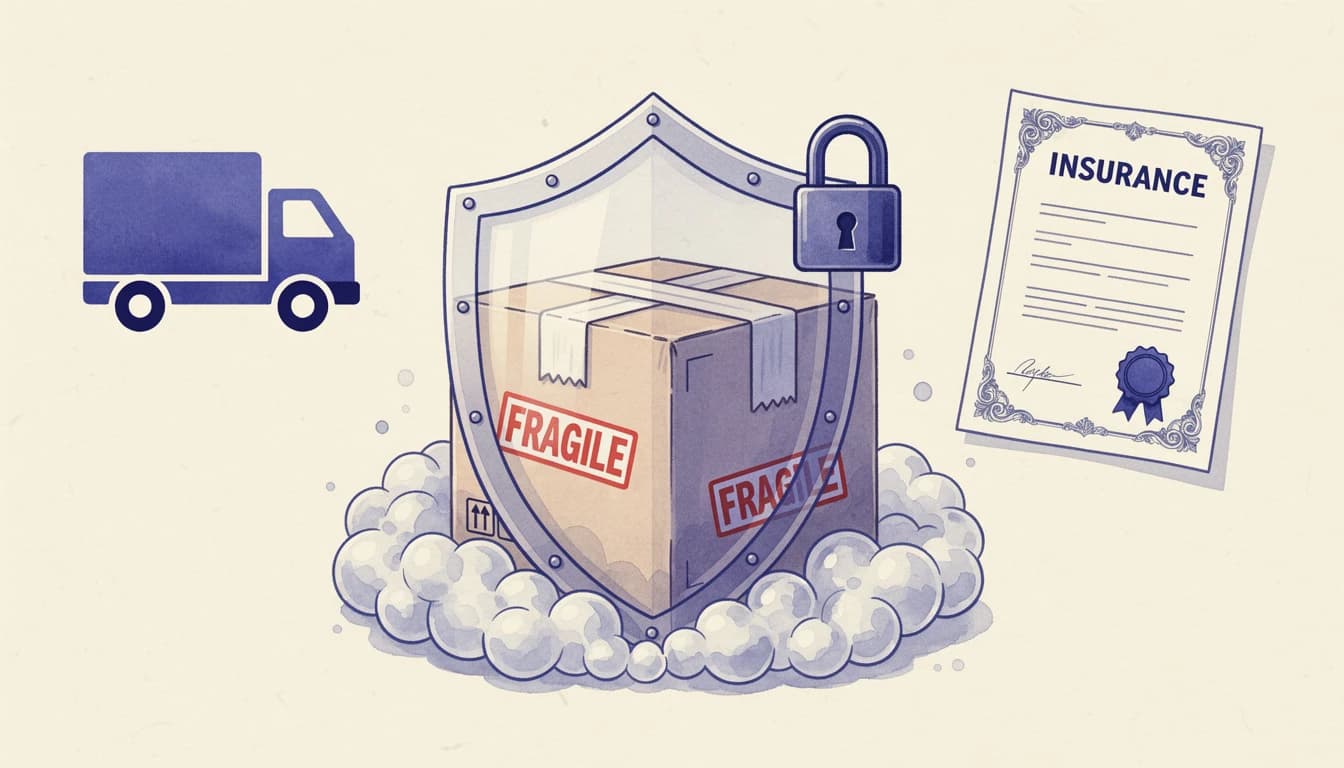
Over 120 million packages were stolen in the United States in 2024 - a 34% increase year-over-year. Add shipping damage, lost parcels, and delivery failures, and it's no surprise that 65% of Americans report delivery anxiety. This is exactly why shipping insurance has become a must-have addon for e-commerce stores - customers want protection, and they're willing to pay for it.
A Cover Genius survey found that 60% of consumers would purchase insurance from retailers if offered at checkout. The demand exists. Most stores simply don't offer a way to meet it.
Shipping insurance as a cart addon creates a straightforward value exchange. Customers get peace of mind; you get high-margin incremental revenue. Unlike physical products with cost of goods and fulfillment overhead, a percentage-based insurance addon costs almost nothing to provide while generating pure profit. It's one of the most effective 1-click addons for generating revenue without inventory or fulfillment overhead.
Why Percentage-Based Pricing Works Better Than Flat Rates
Flat-rate shipping protection ($2.99 per order, for example) creates a mismatch. On a $30 order, that $3 fee represents 10% of the purchase - steep for what the customer perceives as low-value protection. On a $300 order, the same $3 covers items worth 100 times more, but the customer isn't charged proportionally for that protection.
Percentage-based pricing solves this naturally. At 3% of order value:
- $50 order → $1.50 protection (reasonable for low-value items)
- $150 order → $4.50 protection (proportional to risk)
- $500 order → $15 protection (appropriate for high-value purchases)
This scaling matches customer psychology. People intuitively understand that protecting a $500 order should cost more than protecting a $50 order. Percentage-based pricing feels fair because the protection value scales with what's at stake.
The shipping insurance market reflects this reality. Market Growth Reports values the shipping insurance market at $34.6 billion in 2025, growing at 11.5% annually - driven largely by e-commerce growth and the increasing value of online purchases.
The Customer Psychology Behind Protection Purchases

Understanding why customers buy protection helps you position it effectively. Three psychological factors drive most insurance purchases at checkout.
Loss Aversion
Behavioral economics tells us that people feel losses roughly twice as intensely as equivalent gains. A customer who loses a $100 package doesn't just feel $100 of pain - they experience closer to $200 worth of negative emotion. Protection that prevents that loss is worth more than its face value suggests.
This is why protection addons convert well even when the statistical probability of loss is low. Customers aren't buying based on probability calculations - they're buying relief from the anxiety of potential loss.
Decision Fatigue Reduction
By the time customers reach your cart, they've made dozens of micro-decisions: which product, which variant, which quantity. A simple protection option requires minimal cognitive effort. "Yes, protect my order" or "No, I'll take the risk" - no research required, no comparison shopping needed.
The one-click nature of cart addons leverages this fatigue. A toggle switch asking "Protect your order for $4.50?" gets conversions that a separate protection page requiring email signup never would.
Reciprocity and Trust
When you offer protection, you signal that you care about the customer's experience beyond the transaction. This builds trust - similar to how trust badges in the cart reduce abandonment by addressing customer concerns at the moment of purchase. Even customers who decline protection appreciate that you offered it - and that appreciation can translate into loyalty and repeat purchases.
This trust-building aspect explains why shipping protection has become a standard offering. When customers know you've got their back if something goes wrong, they're more likely to complete the purchase and return for future orders.
Pricing Your Insurance Addon: Finding the Sweet Spot
The right percentage balances customer value perception against revenue generation. Price too high, and customers reject it; price too low, and you leave money on the table.
Industry Benchmarks
Based on common market rates:
- 1-2%: Conservative, maximizes attach rate, lower per-order revenue
- 2-4%: Sweet spot for most stores - reasonable customer value, healthy margins
- 4-5%: Higher revenue per protected order, may reduce attach rates
- 5%+: Typically reserved for high-risk categories (fragile items, premium products)
Easyship offers domestic insurance starting at 1% of shipment value, with international shipments starting at 1.5%. These rates provide a useful floor for pricing your own protection offering.
Testing Your Price Point
Start at 3% and measure for 30 days. Track two metrics:
- Attach rate: What percentage of orders include protection?
- Revenue per order lift: How much does protection add to average order value?
If your attach rate exceeds 30%, you may be priced too low - customers are snapping it up without hesitation. If it's below 10%, your pricing or value proposition may need work. The 15-25% range typically indicates healthy balance.
The data confirms this range works: research from Narvar shows that one in four shoppers opt into shipping protection, with rates reaching 65% among Millennials and Gen X customers.
What to Include and Exclude From Calculations
Not everything in a cart should count toward protection pricing:
- Include physical products - the items being shipped are what customers expect protection to cover
- Exclude gift cards - they're digital value transfers, not shipped items that can be damaged or stolen
- Exclude digital products - e-books, software, and courses aren't affected by shipping issues
For pre-discount vs. post-discount pricing: pre-discount ensures replacement coverage matches actual product value, while post-discount feels more transparent to customers. Test both if your analytics support it.
Crafting Effective Shipping Insurance Messaging
Generic "Add protection" messaging underperforms. Specific, benefit-focused language converts better.
Title Examples That Work
Weak: "Add protection" Better: "Protect your order for {price}" Best: "Get covered against loss, theft, and damage for just {price}"
Dynamic pricing variables like \{price\} let customers see exactly what they'll pay without mental math.
Description That Builds Confidence
Your description should answer three questions customers implicitly ask:
- What does this protect against? (loss, theft, damage)
- What happens if something goes wrong? (free replacement, hassle-free claims)
- How do I use it? (contact us within 30 days)
Example: "If your order is lost, stolen, or arrives damaged, we'll replace it free - no questions asked. Just reach out within 30 days."
Visual Styling That Signals Protection
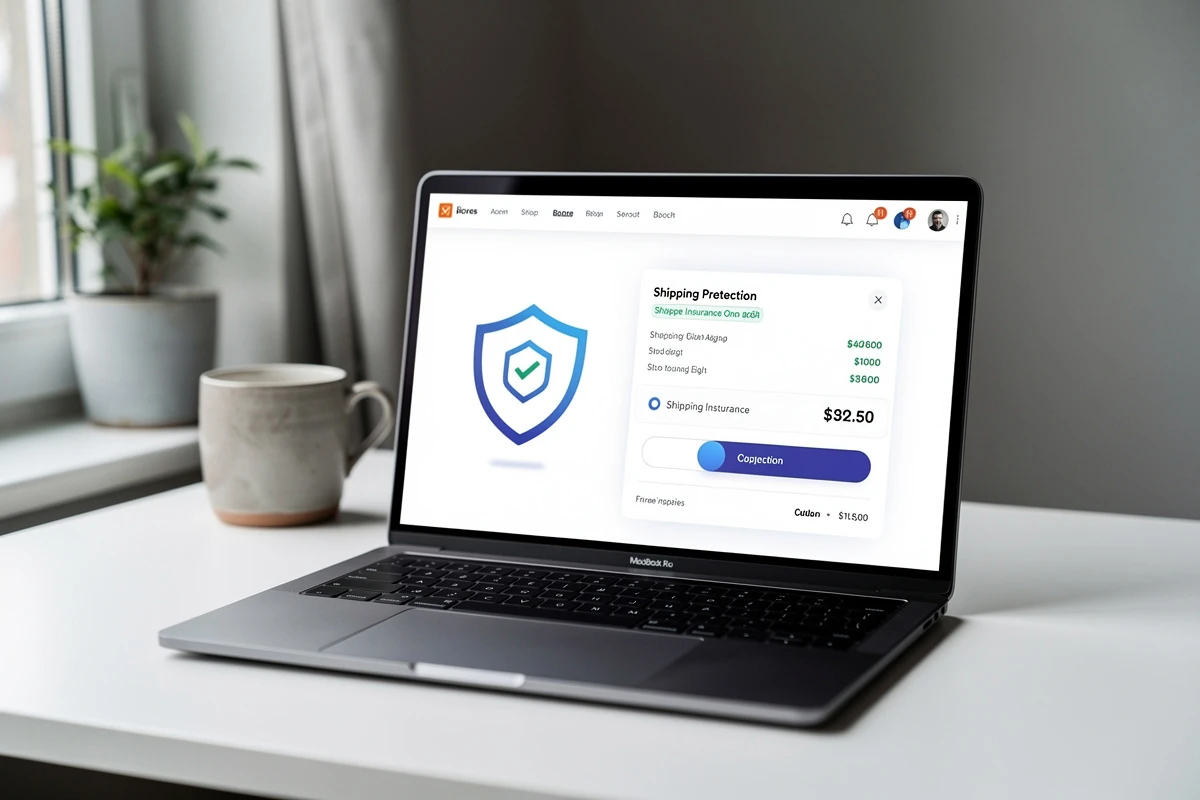
Protection addons perform better with switch-style toggles rather than checkboxes. The on/off metaphor matches how customers think about protection: it's either active or it isn't. Consider using an image style that displays a shield icon - this visual reinforces the protection concept without requiring customers to read.
Market and Schedule Considerations
Shipping insurance isn't equally relevant everywhere. Strategic targeting improves both customer experience and conversion rates.
Geographic Targeting

Consider showing insurance only in markets where it makes sense:
- High-theft regions: Urban areas with documented porch piracy issues
- International shipments: Longer shipping chains mean more opportunities for problems
- Specific countries: Regulatory requirements may affect what you can offer where
If you ship internationally, InsureShield research shows that 45% of merchants ship more than 20% of orders internationally. International shipping carries higher risk - insurance becomes proportionally more valuable. You can even show insurance only to customers in specific markets to comply with regional regulations while maximizing revenue where it makes sense.
Seasonal Considerations
Protection demand spikes during holidays (higher package volumes), sale periods (higher-value carts), and product launches (customer anxiety about new releases). Consider increasing visibility during these periods.
Measuring Success Beyond Attach Rate
Attach rate tells you how often customers accept protection, but effective cart analytics require tracking these metrics too:
- Revenue contribution - what percentage of total revenue comes from protection sales at near-100% margin
- Claim rate - low rates mean higher net margins; high rates may indicate pricing issues or fraud
- Cart abandonment impact - done well, protection reduces abandonment by addressing anxiety; done poorly, it increases it
- Customer satisfaction - easy claims processes drive loyalty; difficult ones destroy it
Setting Up Percentage-Based Insurance
If you're using EliteCart, configuring percentage-based shipping insurance follows a streamlined process:
- Navigate to Cart Designer → Addons & insurance
- Enable an addon slot and select Insurance (% of sales)
- Grant product creation permission when prompted
- Enter a product title (like "Shipping Protection")
- Click Create product - this generates a product with 100 price variants for accurate percentage-based pricing
- Set your percentage and configure calculation options
- Customize title and description text
The system automatically selects the correct variant based on cart total, so customers always see pricing that matches your configured percentage. You can further refine by excluding gift cards and digital products from calculations, using pre-discount totals for replacement value accuracy, and targeting specific markets if needed.
Shipping insurance represents one of the highest-margin addon opportunities available. Customers want protection - 65% of Americans experience delivery anxiety. Start with a 3% rate, measure your attach rate over 30 days, and optimize from there. The incremental revenue requires no inventory, no fulfillment complexity, and scales automatically with your order volume.