
In-Cart Strategies for Baby and Kids Product Stores
Parents shopping for baby and kids products represent one of the most valuable customer segments in e-commerce. The right in-cart strategies can transform these emotional purchases into higher order values and long-term loyalty. The global baby products market is projected to reach USD 382.9 billion by 2026, with online channels representing a fast-growing share of sales. What makes this market particularly interesting for cart optimization is the combination of emotional purchasing decisions, predictable consumption patterns, and high lifetime value - a parent who trusts your store today will likely return for years as their child grows.
The baby products category presents unique opportunities for in-cart strategies. Parents are often buying for specific developmental stages, making age-appropriate product recommendations highly relevant. Safety concerns drive addon purchases more than in almost any other category. And consumables like diapers and formula create natural subscription opportunities that can transform one-time buyers into long-term customers.
Age-Appropriate Product Recommendations for Baby Stores
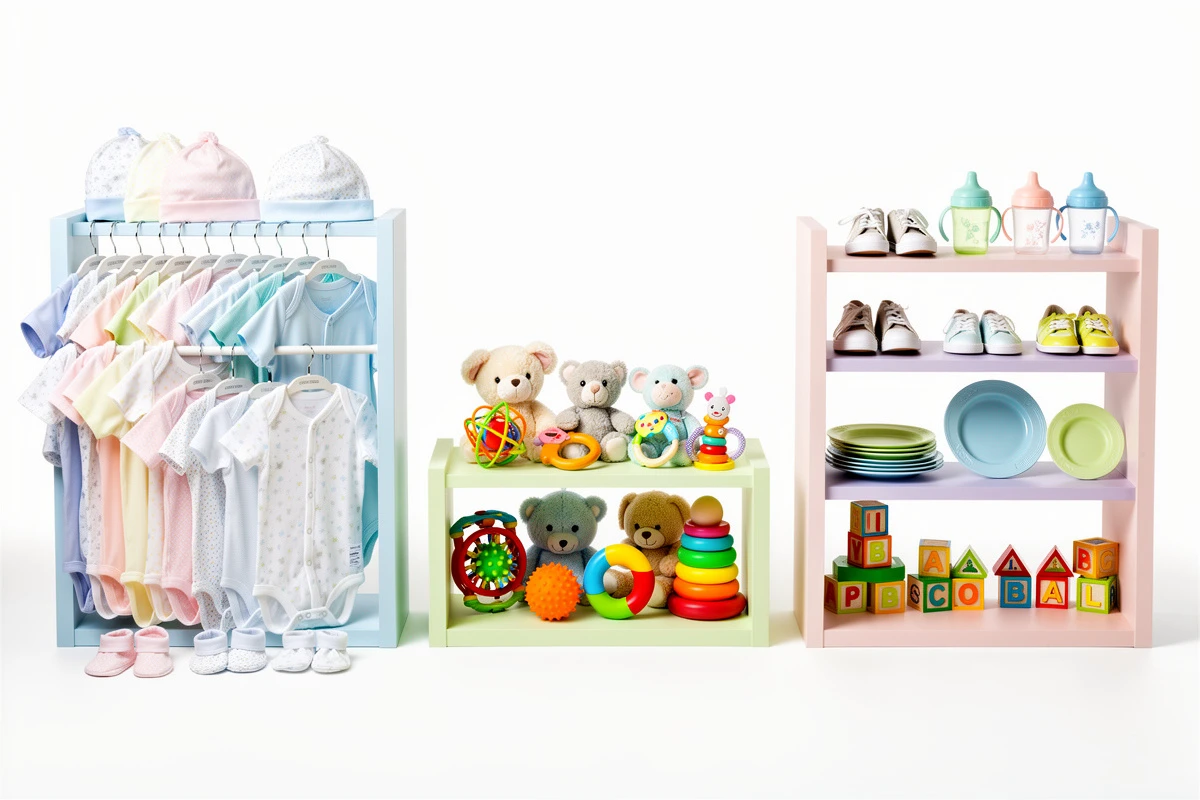
A parent buying a newborn swaddle blanket has very different needs than someone purchasing toys for a toddler. Generic "you may also like" recommendations miss this context entirely - and miss revenue opportunities in the process.
The key is using cart contents as signals for developmental stage. When a customer adds infant formula to their cart, they're shopping for a baby under 12 months old. Products like burp cloths, pacifiers, and swaddle blankets become immediately relevant. When they're buying sippy cups and toddler utensils, the same customer has moved to a different stage - recommendations should shift to potty training supplies, childproofing equipment, and age-appropriate toys.
Building Stage-Based Upsell Logic
Effective baby store upsells follow predictable patterns based on what's already in the cart:
Newborn (0-3 months): Formula or bottles → Burp cloths, pacifiers, diaper cream, sleep sacks Infant (3-12 months): Baby food or teething toys → Bibs, sippy cup starters, highchair accessories, baby gates Toddler (1-3 years): Training pants or toddler toys → Potty training seats, safety locks, educational toys, toddler bedding
The recommendations feel helpful rather than pushy because they anticipate what parents actually need for their child's current stage. A first-time parent buying infant formula might not realize they need burp cloths - showing them in the cart serves a genuine need.
Configure these as conditional upsell flows that trigger based on specific products or collections. The Gallery of 3 display type works well for baby products since parents often want to see multiple options at once - they might need burp cloths but want to compare patterns or materials.
Safety Accessories: The Essential Addon Category
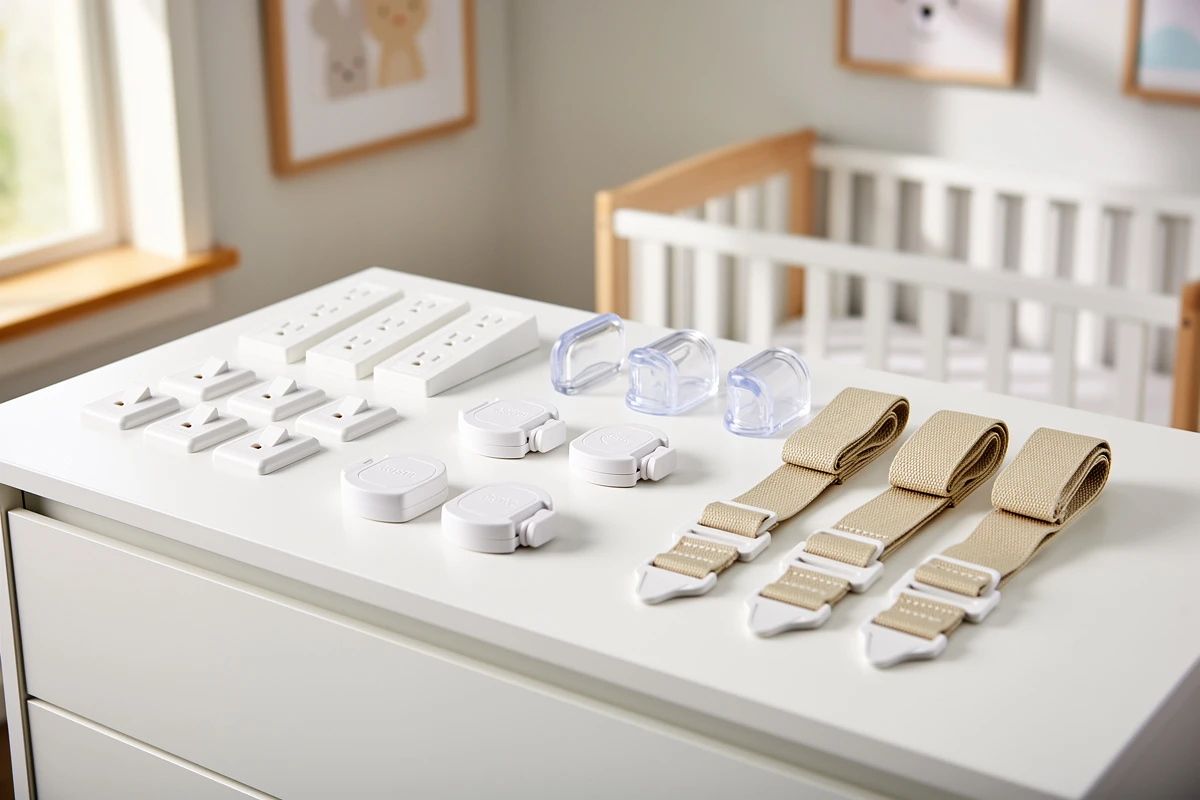
Safety products represent the highest-converting addon category for baby stores. Parents prioritize their children's wellbeing above almost everything else, and the emotional weight of a safety-related purchase reduces price sensitivity.
The psychology works in your favor: a parent spending $200 on a new crib will readily add $15 outlet covers or $12 corner protectors. The addon cost is minimal relative to the primary purchase, and the peace of mind is immediate.
High-Converting Safety Addons
For nursery furniture purchases:
- Outlet covers and cord organizers
- Dresser anchoring straps
- Baby monitor accessories
- Crib sheet protectors
For mobility products (strollers, car seats):
- Car seat mirrors for rear-facing seats
- Stroller cup holders or organizers
- Sunshades and rain covers
- Car seat protector mats
For feeding products:
- Non-slip suction bowls
- Food-grade silicone bibs
- Temperature-sensitive spoons
The "Minimal" addon display style works well for safety products because the purchase decision is driven by utility, not aesthetics. Clear, descriptive titles like "Add outlet safety covers - $8.99" communicate exactly what the customer gets. Parents making safety-related purchases respond to straightforward value propositions.
Gift Wrapping for Baby Shower Purchases

Baby showers drive significant e-commerce volume, with personalized and premium gift items trending strongly. The personalized gifts market is valued at over $30 billion globally and growing steadily - and few occasions inspire gift-giving like the arrival of a new baby.
Baby shower purchases have a distinct characteristic: buyers often want the gift to look special on arrival. This creates a natural opportunity for premium gift wrapping addons.
Implementing Gift Wrap for Baby Stores
Create a dedicated gift wrapping product with variants for different options:
- Standard tissue paper and ribbon
- Premium gift box with bow
- Keepsake presentation box
The Image main style showcases what the wrapping looks like - important for gift purchases where presentation matters. Gift messaging adds additional value: a simple gift card option turns an online purchase into something personal.
Subscription Upsells for Consumables
The baby products category includes some of the most subscription-friendly items in e-commerce. Diapers, formula, wipes, and baby food share two critical characteristics: predictable consumption rates and high purchase frequency. Parents know they'll need more next month.
Research from McKinsey found that replenishment subscriptions have a 65% conversion rate among consumers who consider them - higher than any other subscription model. Parents of young children are prime candidates because their consumption patterns are remarkably predictable.
Presenting Subscriptions in the Cart
The cart is the optimal moment to present subscription upgrades. Parents adding diapers to their cart have already decided to buy - the question is whether they'll buy once or set up recurring delivery.
A well-timed "Subscribe & Save 15%" button transforms a one-time diaper purchase into recurring revenue. The parent gets guaranteed supply and a discount; you get predictable monthly orders.
Key consumables for subscription focus:
Diapers and training pants - The highest-frequency consumable, with parents of newborns using 10-12 diapers daily Formula - Predictable monthly consumption with high order values Baby wipes - Used far beyond diaper changes, for hands, faces, surfaces Baby food pouches - Parents feeding infants and toddlers go through these quickly
Subscription offers should show the savings percentage prominently. "Subscribe & Save 20%" is more compelling than "Set up auto-delivery." The discount percentage translates immediately into money saved - important for parents managing tight budgets with a new addition to the family.
Reward Bars for Free Shipping and Gifts
Parents buying baby products often make multi-item purchases. They need diapers AND wipes AND diaper cream. This shopping pattern makes reward bars particularly effective - customers are likely to add items anyway, so showing progress toward a reward nudges them to consolidate purchases.
Set free shipping thresholds based on your typical order composition. If parents commonly order $45-55 worth of products, a $59 free shipping threshold encourages them to add one more item rather than split orders.
Gift Rewards for Baby Stores
Free gift rewards can be highly effective in this category. Parents feel positive about getting something extra for their child, even if it's a small item. Consider:
- Free sample-size products at lower thresholds ($30)
- Free full-size consumable (travel wipes, small diaper pack) at medium thresholds ($75)
- Free premium item (branded bib, toy) at higher thresholds ($100+)
The reward bar messaging should emphasize the benefit to the child: "Add $12 more for a free teething toy" performs better than generic shipping messaging because it connects to what parents are already thinking about - their baby.
Combining In-Cart Strategies for Maximum Impact
These approaches work together. A parent buying formula might see a reward bar showing they're $15 from free shipping, add recommended burp cloths (getting closer to free shipping), check the gift wrapping option for a baby shower gift, and click "Subscribe & Save 20%" on the formula. Each element serves a genuine need while increasing order value.
Positioning for a Clean Cart Experience
Strategic positioning keeps the cart organized:
- Upsells positioned below line items so parents review their cart contents first
- Addons (gift wrap, safety accessories) as simple checkboxes in the cart summary
- Subscription upgrades attached to individual line items
- Reward bar at the top to provide context
Building Trust in Your Baby Product Cart
Parents buying for their children - especially first-time parents - need reassurance. Trust badges near the checkout button address these concerns: safety certifications, satisfaction guarantees, and secure payment indicators all reduce hesitation. For baby products, badges indicating child-safety testing or organic certifications carry extra weight.
Product savings displays also build trust. When parents see the compare-at price next to the sale price, they feel confident they're getting a good deal.
Baby and kids products offer exceptional opportunities for cart optimization. The combination of emotional purchases, predictable consumption, and high customer lifetime value makes this category ideal for upsells, addons, and subscriptions. Start with one strategy - gift wrapping for the upcoming baby shower season, or subscriptions for your consumable products - then expand based on what your data tells you about your specific customers and their growing families.