
How Jewelry Stores Can Use Cart Upsells to Increase Order Values
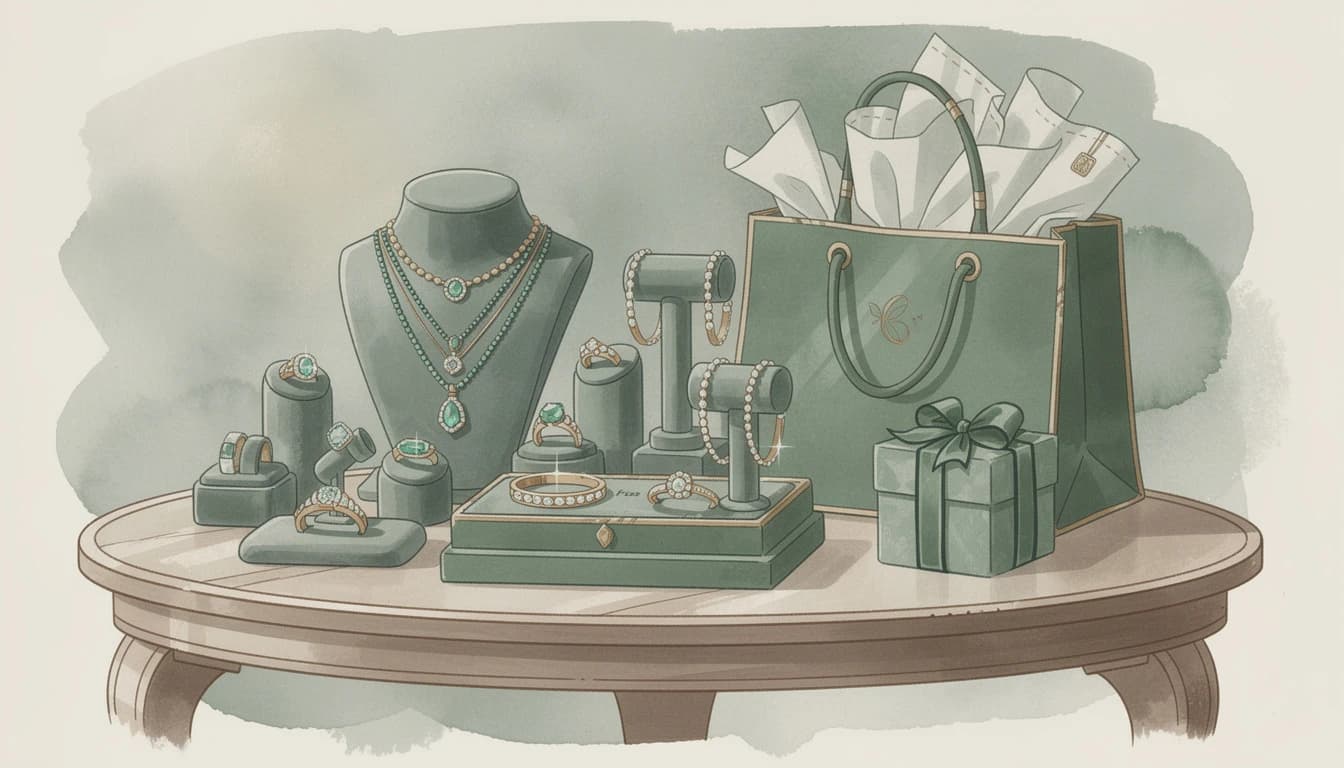
The jewelry industry commands the highest average order values in e-commerce - reaching $436 per checkout in peak months and consistently averaging above $300 throughout the year. This positions jewelry stores for significant cart upsell revenue, since even modest percentage increases translate to meaningful dollar gains. A 15% AOV increase on a $350 order adds $52.50, compared to just $3.75 on a $25 order in other retail categories.
Jewelry also benefits from natural product relationships that make cart upsells feel helpful rather than pushy. Earrings complement necklaces. Cleaning kits protect investments. Gift wrapping elevates the gifting experience. These connections mirror how customers already think about jewelry purchases, making upsell offers feel like good advice from a knowledgeable jeweler.
Why Jewelry Customers Are Primed for Cart Upsells
Several characteristics make jewelry shoppers receptive to cart upsells:
- High emotional investment: Purchases tied to special occasions make customers open to suggestions that enhance or protect their purchase
- Protection mindset: Buyers spending $200-500 actively look for ways to safeguard their investment
- Gifting context: Gift buyers are already thinking about presentation
- Set-building instinct: Jewelry naturally comes in matching sets, creating organic cross-sell opportunities
Strategy 1: Jewelry Care Kits as Addons
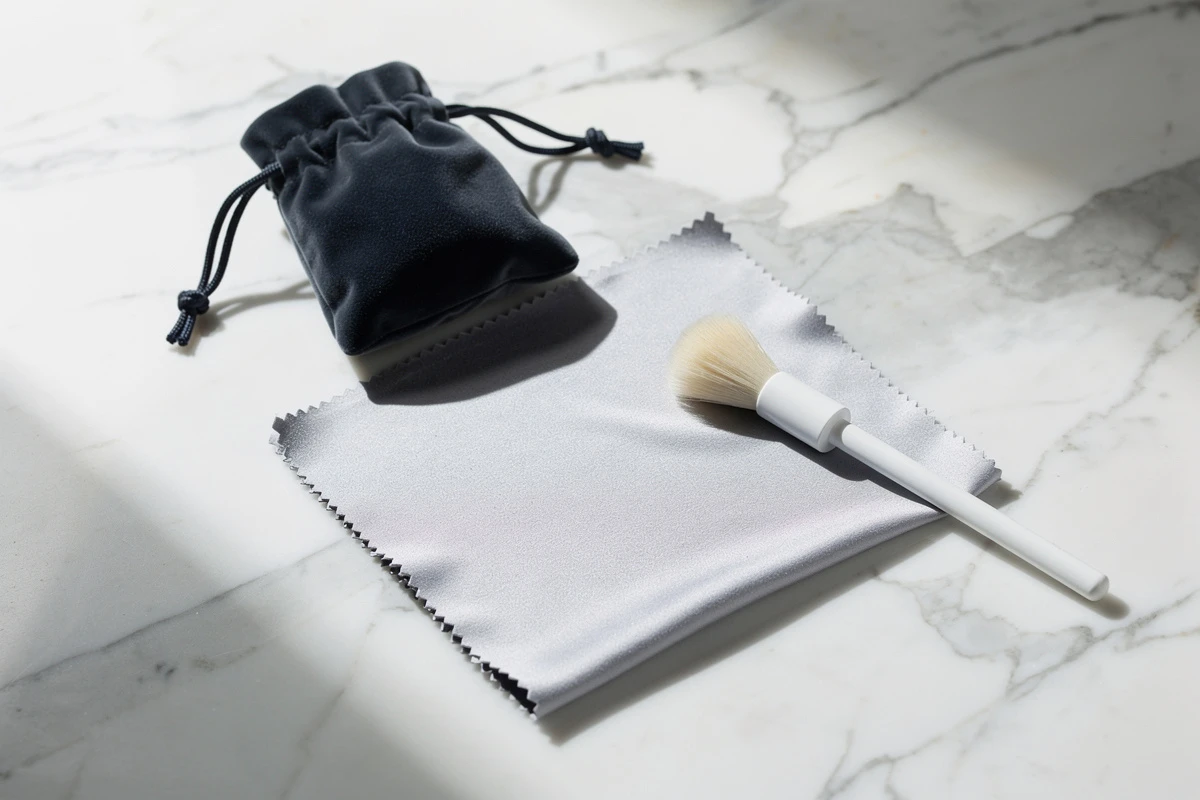
Cleaning kits represent the highest-margin, lowest-friction upsell for jewelry stores. When someone adds a sterling silver necklace to their cart, a cleaning kit addresses an immediate concern - the customer is already thinking about long-term care. Care products typically cost $3-8 to source but sell for $15-30, and unlike the jewelry itself, they don't require style matching.
Match care products to your jewelry type:
- Silver jewelry: Anti-tarnish cloths, silver polish, storage pouches
- Gold jewelry: Gentle cleaning solutions, polishing cloths
- Gemstone pieces: Soft brushes, gemstone-specific cleaners
- Costume jewelry: Storage solutions, gentle cleaning wipes
Use 1-Click Addons to present care products in the cart without disrupting checkout. These high-margin addons require zero inventory management since you're bundling existing care products as optional extras. Configure your addon through Cart Designer → Add-ons, where you can customize the display style. For care products, the image style works well - customers respond to seeing the actual kit they'll receive.
Strategy 2: Gift Wrapping and Premium Presentation

Gift wrapping taps into the gifting context that drives much of jewelry purchasing. For gift-givers who won't be present at unboxing, presentation becomes their proxy for care and thoughtfulness.
Physical jewelry stores provide elegant boxes and bags as standard. Online buyers often receive practical but unremarkable packaging. Premium gift wrapping closes this gap.
Consider offering multiple presentation levels:
- Standard packaging ($5-8): Quality box with tissue paper and ribbon
- Premium presentation ($15-25): Branded luxury box, satin ribbon, gift card enclosure
- Signature experience ($30-50): Keepsake jewelry box, hand-tied ribbon, wax seal, personalized note
Tiered options let customers self-select based on the occasion's importance. A $300 engagement ring purchase justifies a $30 presentation upgrade, while a $40 birthday bracelet might call for standard packaging. Pair gift wrapping with a gift message option to add extra value for remote gift-givers.
Strategy 3: Complementary Pieces and "Complete the Look" Upsells
Jewelry's natural set structure creates powerful cross-sell opportunities. The key is specificity - generic "you might also like" suggestions feel algorithmic, while specific pairing recommendations feel like expertise.
When a customer adds drop earrings to their cart, show the matching pendant necklace from the same collection. When someone buys an engagement ring, suggest the coordinating wedding band designed to nest with that style.
Configure pairing recommendations through the Upsells section in EliteCart, where you can create flows triggered by specific products or collections. Consider offering a small discount on complementary pieces to boost take rates without eroding margins on the primary piece. Effective pairings include:
- Within collections: If you designed pieces to go together, show them together
- By metal type: Yellow gold buyers want other yellow gold pieces
- By occasion: Wedding buyers often need earrings, necklaces, and hair accessories
- By style: Minimalist buyers respond to other minimal pieces
Jewelry is visual - use the Gallery or Carousel display types to show product images prominently.
Strategy 4: Shipping Insurance for High-Value Orders
The average jewelry order value of $300+ means customers have significant financial exposure during shipping. Insurance offers transform shipping anxiety into confidence - for 2-4% of their order, customers can eliminate worry entirely. For a deep dive on why shipping insurance addons generate high-margin revenue, see our dedicated guide.
Flat-rate insurance creates mismatches: $5 protection feels expensive on a $50 order but inadequate for $500. Percentage-based pricing scales with order value automatically.
Configure percentage-based insurance through Cart Designer → Add-ons by selecting the insurance addon type. For jewelry, consider calculating insurance on the pre-discounted cart total - if someone buys a $400 necklace at 20% off, insuring only the $320 sale price may not cover full replacement cost.
Position insurance as protection, not a purchase. Language like "Protect your order" resonates better than "Add shipping insurance." Use the switch toggle style, and for high-value orders, consider enabling insurance by default - customers can opt out, but starting protected acknowledges their implicit concern.
Strategy 5: Tiered Rewards and Free Shipping Thresholds
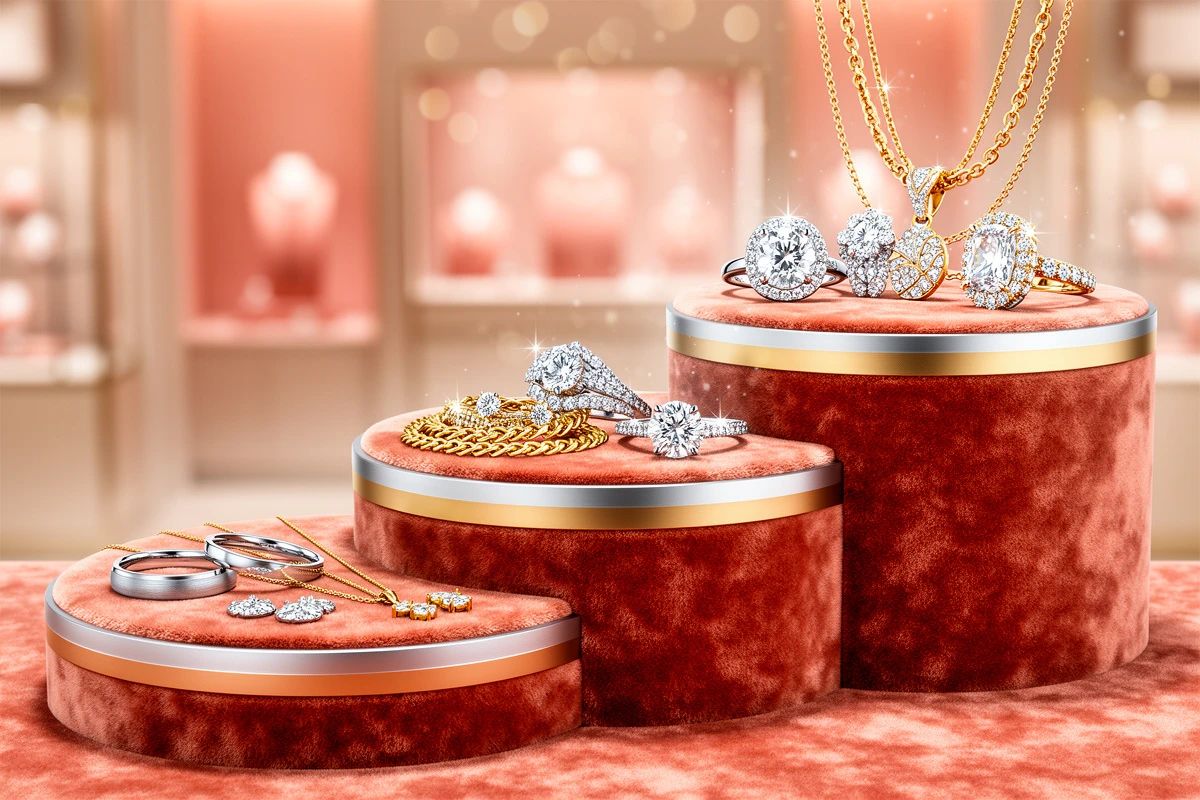
Jewelry's high average order values make tiered rewards effective. A progress-based reward bar shows customers exactly how close they are to unlocking each tier. If your average order is $280, a free shipping threshold at $300 gives most customers a reasonable stretch target.
Consider three-tier structures:
- First tier ($150-200): Free standard shipping
- Second tier ($300-350): Free express shipping or a care kit
- Third tier ($500+): Premium gift - perhaps a jewelry travel case or polishing set
Effective rewards include care products, accessories (ring holders, jewelry boxes), branded items, and service upgrades (free engraving, expedited shipping). Match rewards to thresholds - higher spend should unlock genuinely valuable rewards.
Configure reward tiers through Cart Designer → Rewards & free shipping, where you can set thresholds and assign specific products or services for each level.
Implementation: Where to Start
For jewelry stores new to cart upsells, begin with the highest-impact strategies:
- Add shipping insurance: Minimal setup, addresses genuine customer concern. Start at 2-3%
- Launch care product addons: Source a cleaning kit, set up as a 1-click addon
- Implement gift wrapping: Start with a single premium option - demand spikes in November-December
- Build complementary piece flows: Requires more effort but delivers highest long-term value
Track take rates, revenue per cart, AOV lift, and margin contribution. A successful upsell strategy typically adds $30-50 to average order value - an 8-14% lift on a $350 base order.
Jewelry stores sit in a unique position for cart upsells. High order values mean every percentage point matters. Natural product relationships make recommendations feel helpful. And the emotional context of jewelry purchases makes customers receptive to enhancements that protect their investment or elevate the gifting experience. The strategies outlined here - care kits, gift wrapping, complementary pieces, shipping insurance, and tiered rewards - work together to transform every cart into an opportunity to serve customers better while growing revenue.