
Cart Upselling for Automotive Parts and Accessories Stores
Auto parts customers rarely need just one thing. A shopper buying motor oil needs a filter. Someone replacing headlight bulbs likely needs wiring connectors. A brake pad purchase practically demands rotor clips and caliper grease. Cart upselling for automotive parts and accessories stores works because vehicle maintenance is inherently multi-product - and customers know it.
The online automotive aftermarket is growing fast, valued at over $88 billion globally in 2025 and projected to surpass $477 billion by 2034 according to Polaris Market Research. With average order values that often exceed $150 for online auto parts purchases, there's real room to grow each transaction by surfacing the right complementary products at the right moment.
Why Auto Parts Stores Have a Natural Upsell Advantage
Every vehicle repair or upgrade involves a cluster of related parts. This isn't like fashion, where a suggested scarf is a nice-to-have. In automotive, the complementary product is often a functional requirement.
When a customer adds brake pads to their cart, they're already committed to the job. The psychological barrier to adding brake cleaner and a hardware kit drops dramatically - these are things they'll need regardless. This creates a powerful upsell dynamic:
- Functional dependency: Many parts only work alongside other parts
- Job completion mindset: Customers want everything for the repair in one order
- Compatibility certainty: Buying matching parts from one store avoids fitment headaches
- High baseline AOV: Average tickets well above typical e-commerce orders mean even small percentage lifts translate to meaningful revenue
Vehicle-Specific Complementary Parts
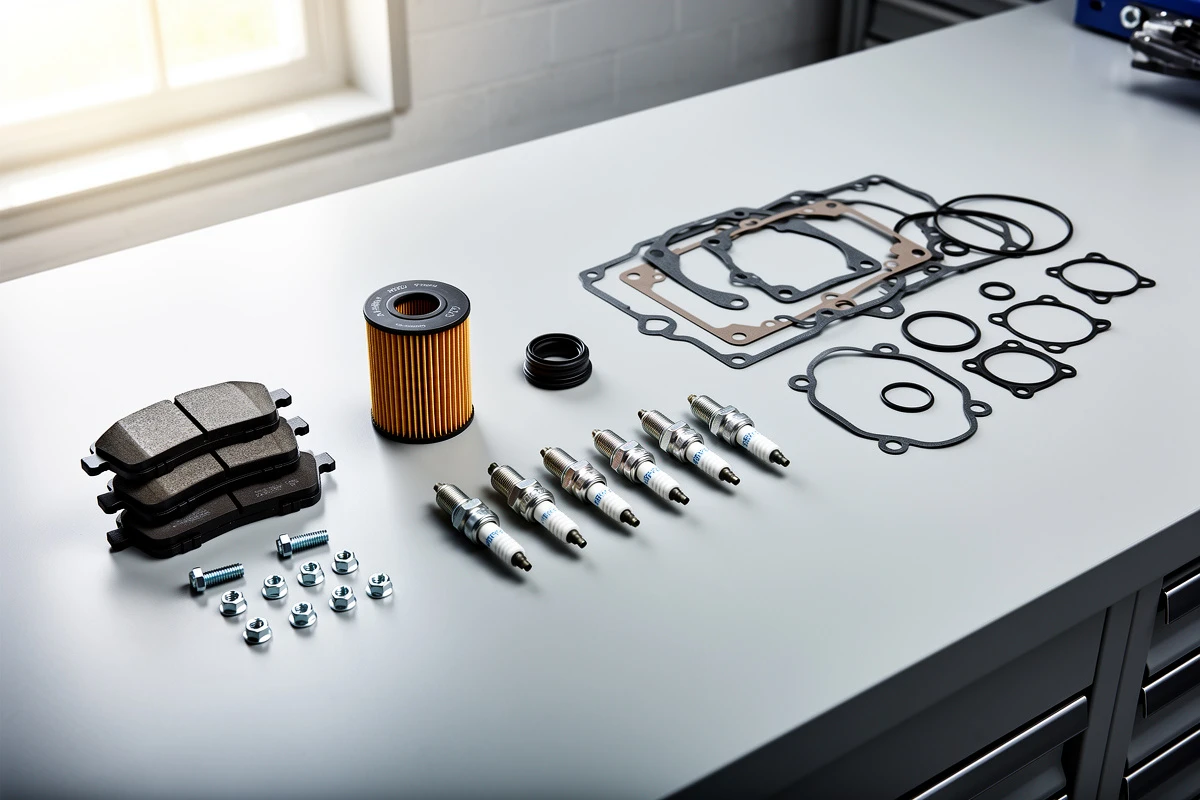
The highest-converting upsells in automotive are parts that pair naturally with whatever is already in the cart. Generic "you might also like" suggestions fall flat here - fitment and compatibility matter too much.
Oil Change Kits
When someone adds motor oil, show the matching oil filter, drain plug gasket, and crush washer for their vehicle. These items are inexpensive individually but add $15-30 to the order. More importantly, they save the customer a second trip to the parts store - a genuine convenience.
Lighting and Electrical
A customer buying replacement headlight bulbs often needs bulb connectors, wiring harnesses, or lens restoration kits. LED upgrade buyers may need load resistors or decoder modules to prevent dashboard warning lights. These are the exact items that customers discover they need mid-project, so surfacing them in the cart prevents frustration.
Brake Jobs
Brake pad purchases pair naturally with rotors, hardware kits, caliper grease, and brake cleaner. A shopper replacing pads on one axle often needs them for the other side too. Position the matching rear pads as an upsell when front pads are in the cart - "Doing the rear brakes too?" is a message that resonates.
Filters and Maintenance
Air filter buyers need cabin filters. Spark plug shoppers need anti-seize compound and a gap tool. Transmission fluid purchases pair with filter kits and gaskets. Map your top-selling maintenance items to their natural companions and build dedicated upsell flows for each.
Set up collection-based triggers so that customers browsing your "Oil Change" collection see oil-adjacent upsells, while those in "Brake Components" see brake-related suggestions. EliteCart lets you create upsell flows that trigger based on specific products or collections in the cart, ensuring each recommendation is relevant to the job at hand.
Installation Tool Addons
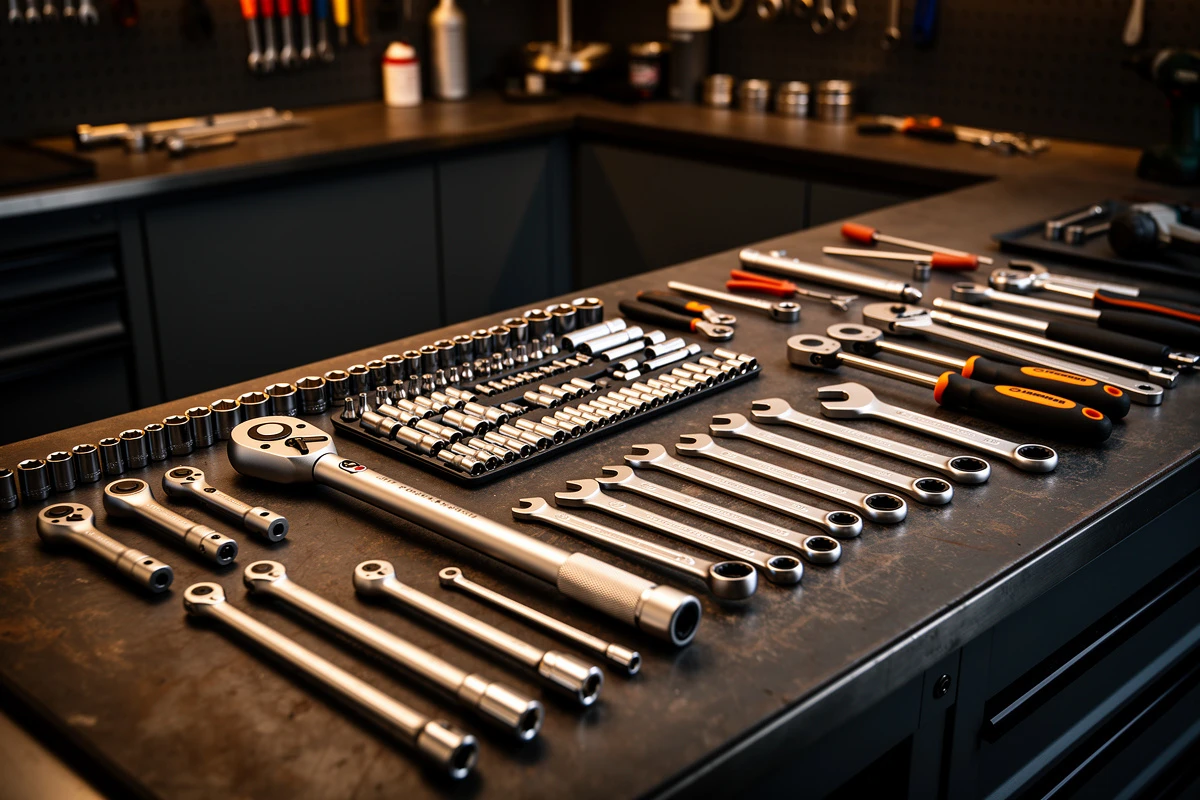
Here's what separates a smart auto parts store from a parts catalog: recommending the tools needed to install the parts.
Many DIY mechanics are missing specific tools for specific jobs. A customer buying an oxygen sensor may not own the correct socket. Someone replacing tie rod ends needs a pickle fork or puller. These tool recommendations accomplish two things: they add revenue and they reduce returns from customers who couldn't complete the installation.
Consider offering common installation tools as 1-click addons in the cart. A torque wrench, a set of panel removal tools, or a trim clip assortment kit are low-cost items that pair well with almost any order. Position them with practical messaging: "Need tools for the install?" rather than a generic pitch.
For recurring tool recommendations, EliteCart's 1-click addon feature lets you configure products that appear as a simple toggle in every cart - perfect for items like nitrile gloves, shop towels, or thread locker that complement virtually any parts order. These high-margin additions require zero inventory overhead - our guide to 1-click addons as a revenue stream covers the strategy in detail.
Shipping Insurance for Fragile Components
Auto parts present unique shipping challenges. Sensors, glass components, ceramic brake pads, and electronic modules are fragile. Body panels and bumper covers are large and damage-prone. Wheels and heavy assemblies risk carrier mishandling.
Shipping insurance as an addon makes strong sense for automotive stores because:
- High item values mean damage creates painful losses
- Fragile components like sensors and electronics are vulnerable
- Oversized parts like fenders and hoods face higher damage rates
- Customer anxiety is already elevated for expensive mechanical parts
A percentage-based insurance option scales naturally with order value. A $40 filter order pays a small fee for protection, while a $600 set of wheels pays proportionally more. Navigate to Cart Designer → Addons & insurance to set up percentage-based shipping insurance that calculates automatically based on cart total - no manual pricing required.
The key is positioning. Frame insurance as "shipping protection" rather than an upsell. Auto parts customers understand that a cracked sensor housing or a scratched wheel means downtime and hassle. Protection feels like a practical choice, not an add-on. For a deeper look at the revenue mechanics, see our guide on why customers want shipping insurance and how it adds revenue.
Trust Badges for OEM Compatibility
Fitment anxiety is the number one hesitation for online auto parts buyers. "Will this actually fit my vehicle?" is the question running through every customer's mind at checkout. Trust badges directly address this concern.
OEM Compatibility Guarantees
If you sell OEM or OEM-equivalent parts, display certification badges prominently in the cart. A "Guaranteed to Fit" or "OEM Specifications" badge next to your checkout button reduces the mental friction that causes abandonment. Customers who trust that parts will fit are far more likely to add complementary items too - confidence compounds.
Payment and Security Icons
Auto parts orders tend to run higher than average e-commerce purchases. A $400 brake kit or $800 suspension setup triggers more payment anxiety than a $30 t-shirt. Displaying recognized payment icons (Visa, Mastercard, PayPal, Shop Pay) reassures customers that their transaction is secure.
Configure these in Cart Designer → Trust badges where you can enable payment provider icons, custom trust text, and trust badge images. For auto parts, consider trust text like "OEM-spec parts with guaranteed fitment" or "30-day hassle-free returns on all parts."
Warranty and Return Badges
Auto parts customers worry about defective components. A "1-Year Warranty" badge or "Free Returns on Wrong Fitment" message reduces the perceived risk of adding more items to the cart. When customers feel protected, they buy more confidently - and more generously. Our article on trust badges in the cart explores why these small elements have an outsized impact on conversions.
Using a Reward Bar to Hit Free Shipping Thresholds

Shipping costs hit auto parts stores hard. Parts are heavy, often oddly shaped, and expensive to ship. Many stores set free shipping thresholds at $75-150 to offset costs while encouraging larger orders.
A reward bar showing progress toward free shipping is particularly effective for automotive because customers are already buying multiple parts for a single job. Showing "You're $23 away from free shipping" when someone has brake pads in the cart creates a natural reason to add that tube of brake cleaner or set of caliper clips.
Set this up in Cart Designer → Rewards where you can configure threshold-based rewards for free shipping, automatic discounts, or free gift products. For auto parts stores, stacking rewards works well: free shipping at $75, a free shop towel pack at $125, and a discount at $200. For the psychology behind why progress bars outperform static banners, read how a reward bar drives higher average order values.
Building Your Auto Parts Cart Upselling Strategy
The most effective auto parts cart combines several of these elements. A customer adding motor oil sees the matching filter (upsell flow), a set of nitrile gloves (1-click addon), shipping protection (insurance addon), and progress toward free shipping (reward bar) - all reinforced by OEM compatibility badges and secure payment icons.
Start with your highest-volume products. Identify the top 10-20 items by sales volume and map each one to its natural complementary parts. Build upsell flows for these first, then expand. Focus on job completion - what else does the customer need to finish this specific repair or upgrade?
Auto parts stores have a structural advantage when it comes to cart upselling. Vehicle maintenance is inherently multi-product, customers arrive with purchase intent, and compatibility requirements create natural product relationships. Build flows around real jobs, offer tools for the install, protect shipments with insurance, and back it all with trust badges that eliminate fitment anxiety. The result is higher order values built on products your customers genuinely need.