
How AI-Powered Upsells Outperform Manual Product Recommendations
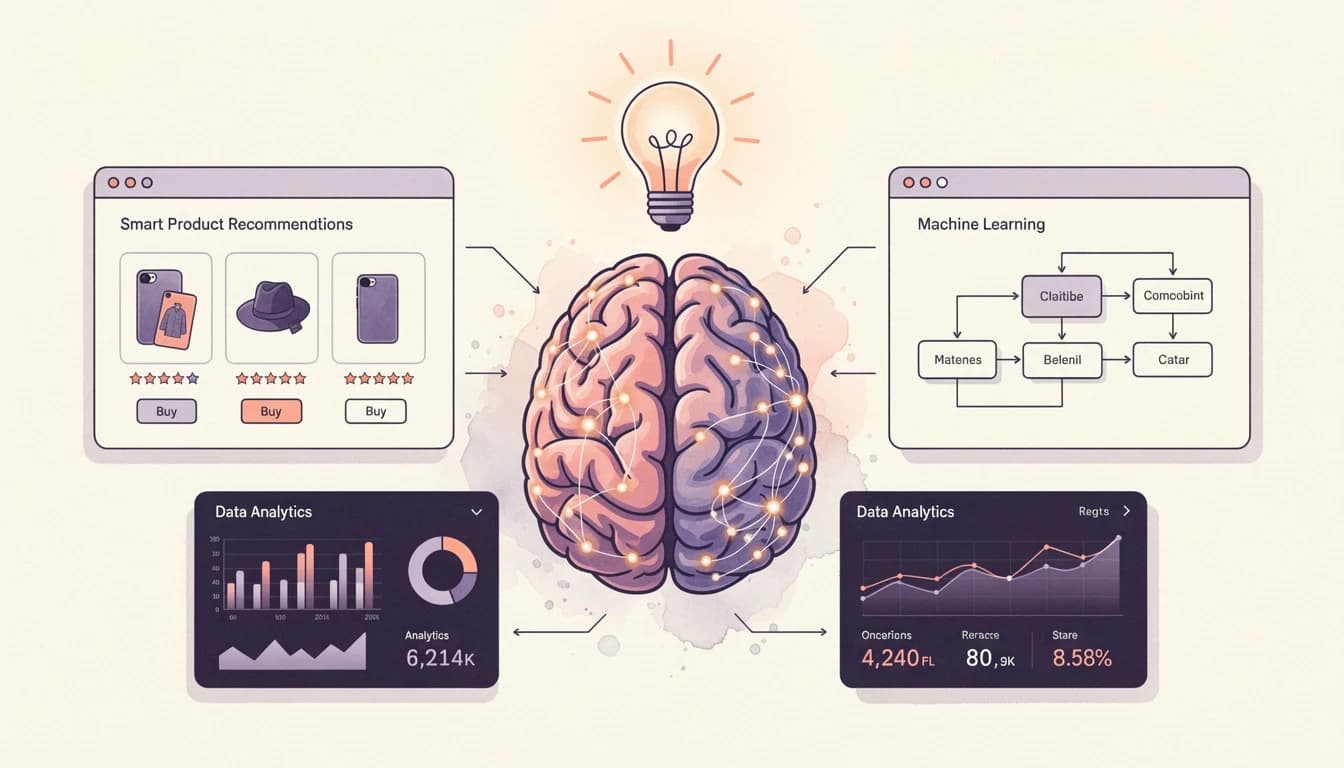
Setting up product upsells manually works - until it doesn't. You create careful pairings, update them seasonally, and still watch potential revenue slip away because customers see the same recommendations regardless of what's actually in their cart. The difference between static recommendations and AI-powered upsells isn't just technical - it's the difference between hoping customers find something relevant and showing them exactly what they're likely to buy.
AI-powered product recommendations now account for up to 31% of e-commerce revenues, according to industry research. That's not a marginal improvement - it's a fundamental shift in how effective upselling can be. If you're still evaluating which approach is right for your store, our guide to choosing the best Shopify upsell app covers the key factors to consider. Let's examine what makes machine learning recommendations outperform manual setups, and when you should still rely on curated selections.
The Core Problem with Manual Recommendations
Manual upsell flows require you to predict what customers want based on general assumptions. You might pair running shoes with athletic socks, which makes sense - but you're showing the same socks to every customer who adds running shoes, regardless of their browsing history, purchase patterns, or what sizes are actually in stock.
This approach has three fundamental limitations:
No real-time adaptation. Your recommendations stay the same until you manually update them. Meanwhile, customer behavior shifts, inventory changes, and trends emerge that your static pairings can't reflect.
No pattern recognition. You're making educated guesses based on product logic, not actual purchase data. The items you think go together might not be what customers actually buy together.
No size or variant intelligence. Manual flows can't know that a customer who wears size 10 shoes shouldn't see socks that are sold out in their size range. Static recommendations treat every customer identically.
For stores with small catalogs and deep product expertise, these limitations are manageable. For growing stores with hundreds or thousands of products, they become significant revenue constraints.
How AI-Powered Upsells Actually Work

Machine learning recommendations analyze purchasing patterns across your entire customer base to identify what products actually get bought together - not what seems like they should be bought together.
McKinsey research shows that personalization typically drives a 10-15% revenue lift when implemented effectively. The improvement comes from several AI capabilities that manual systems can't replicate:
Collaborative filtering. AI examines what customers with similar shopping behaviors purchased together, surfacing non-obvious product connections. A customer buying a coffee maker might see a specific brand of filters that other coffee maker buyers frequently add - a pairing you might never have thought to create manually.
Real-time behavioral signals. Rather than using static customer segments, AI-powered systems can respond to in-session behavior. What a customer adds to their cart, views, and considers all inform which recommendations appear.
Dynamic inventory awareness. Smart recommendation systems can deprioritize products that are sold out in sizes relevant to the current cart. If a customer has size M shirts in their cart, the AI won't prominently feature items that are unavailable in size M.
Stores using sophisticated recommendation engines report conversion rate increases of up to 150% and average order value growth of 50%, according to industry benchmarks. Even more telling: 49% of consumers have purchased something they didn't initially intend to buy after receiving a personalized recommendation.
When Manual Upsells Still Win
AI isn't always the better choice. There are specific scenarios where manually curated recommendations outperform algorithmic suggestions:
New Product Launches
New arrivals lack the purchase history that AI needs to make confident recommendations. Machine learning systems typically need several weeks of sales data before they can accurately predict which new products pair well with existing inventory. During launch periods, manual flows ensure your latest products get visibility.
Compatibility Requirements
Some product pairings aren't about purchase patterns - they're about technical compatibility. If a customer buys an iPhone 15 Pro, you want to show cases that fit that specific model, not just cases that have historically sold well. Manual flows give you precise control over compatibility-based recommendations.
Margin Optimization
AI optimizes for conversion and relevance, which doesn't always align with your highest-margin products. If you want to specifically promote items with better profit margins - regardless of what the data suggests customers prefer - manual curation lets you make that strategic choice.
Brand Storytelling
Curated recommendations can guide customers through a narrative. Showing products in a specific sequence or highlighting items that reinforce your brand identity requires human judgment that algorithms can't replicate.
Limited Data Environments
Niche stores with specialized audiences may not generate enough purchase data for AI to identify meaningful patterns. When your monthly sales are measured in dozens rather than thousands, your personal expertise about what pairs well is likely more accurate than algorithmic guesses.
The Hybrid Approach: Why You Need Both
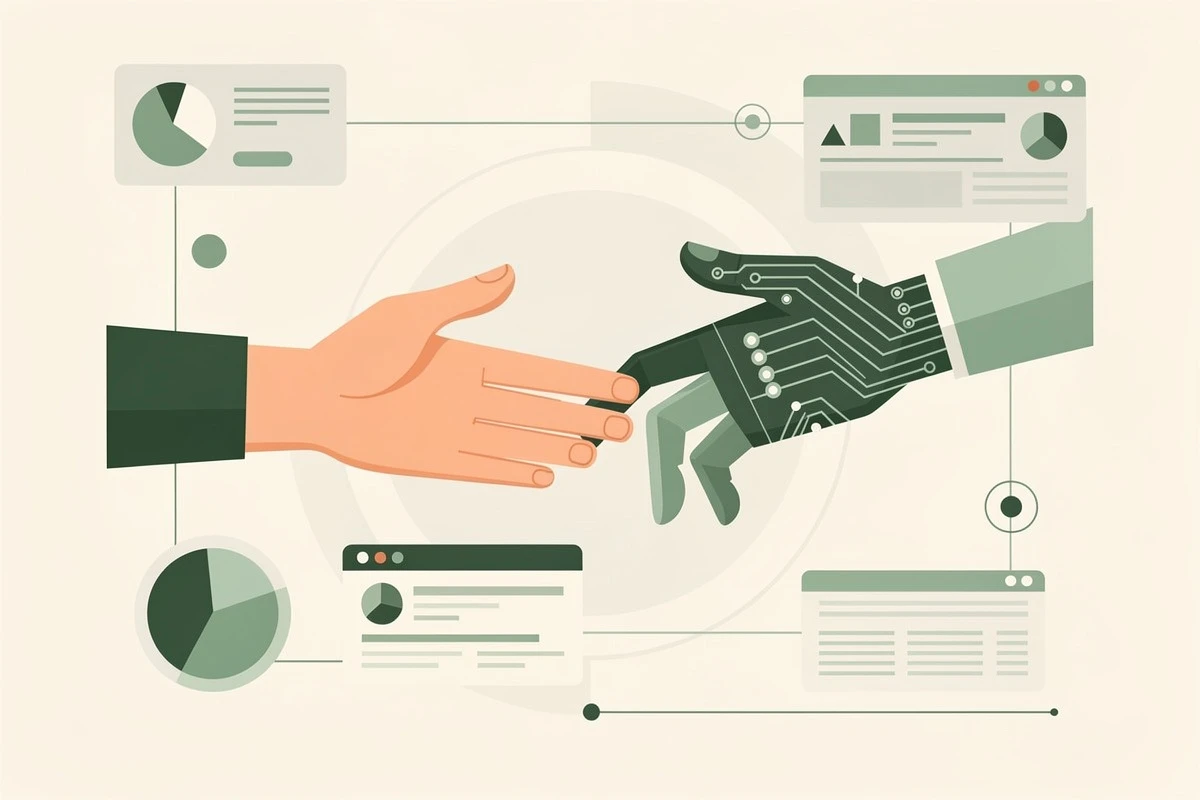
The most effective upselling strategies combine AI capabilities with manual oversight. Here's how the two approaches complement each other:
AI as a safety net. When no manual flows match the current cart contents, AI recommendations ensure customers still see relevant suggestions. This "fallback" behavior means no cart goes without upsell opportunities. For maximum impact, pair this with a two-step cart that presents upsells at the moment of highest purchase intent.
AI to enhance manual selections. Before displaying a manual upsell flow, AI can analyze the products and boost those with higher conversion likelihood based on the specific cart contents. Your curated selection becomes smarter without losing your strategic intent.
AI to fill gaps. When products in your manual flows sell out or become unavailable, AI can extend the selection with additional relevant items. This keeps recommendations fresh even when inventory shifts.
AI for size matching. A customer with size L items in their cart shouldn't see upsells that are sold out in size L. AI can deprioritize unavailable options within your manual flows, improving the customer experience without you updating flows constantly.
The combination addresses the weaknesses of each approach. Manual flows provide strategic control and work with new products; AI provides scale and real-time adaptation.
Implementing AI-Enhanced Upsells
Setting up a hybrid system in EliteCart involves two parallel configurations:
Manual Flows for Strategic Control
- Navigate to Upsells in the main sidebar
- Create flows for specific triggers - products, collections, or cart conditions
- Select which products to show and customize the heading text
- Set priority levels if multiple flows could match
AI Features for Intelligent Enhancement
- Navigate to Upsell Flows & AI in the sidebar
- Enable Fallback to show AI recommendations when no flows match
- Enable SmartBoost to prioritize high-converting products within your flows
- Enable SmartExtend to fill in gaps when flow products sell out
- Enable SmartMatch to deprioritize items unavailable in the customer's size
You can exclude specific products from AI recommendations using product tags - useful for items you want to reserve for manual flows only.
Measuring the Difference
Track these metrics to compare AI-enhanced recommendations against your baseline:
- Click-through rate on upsells - Are customers engaging more?
- Add-to-cart rate from upsells - Does engagement translate to action?
- Revenue from upsells - The bottom line metric
- Items per order - Are customers buying more products?
These metrics matter for your broader cart-to-checkout conversion rate as well. Run your hybrid system for at least two weeks before drawing conclusions. AI recommendations improve as they gather more data about your specific customer base, so early results may understate long-term performance.
The Industry Direction
The e-commerce market's use of AI was valued at $9 billion in 2025 and is projected to exceed $64 billion by 2034. This growth reflects a fundamental shift in expectations: 76% of consumers now feel frustrated when their shopping experience isn't personalized.
Static, one-size-fits-all recommendations are becoming a competitive disadvantage. But that doesn't mean abandoning human judgment - it means augmenting it with systems that can analyze patterns and adapt in real-time at a scale no human team could match.
The stores seeing the best results aren't choosing between AI and manual approaches. They're using each where it excels: AI for pattern recognition, real-time adaptation, and scale; manual curation for strategic positioning, new launches, and brand storytelling.
Start simple. Enable AI fallback recommendations so customers always see relevant suggestions, then layer in manual flows for your strategic priorities. The combination will outperform either approach alone.